Diamonds · 7 min read
Diamond Stud Earrings: Sizes, Settings and Secure Backs
Diamond studs are the earrings people reach for every day, which is exactly why the small decisions matter: how large the diamonds should be, how they are held, and what keeps them on the ear. A pair that is right on all three is worn for decades without a second thought.
This guide takes each in turn, with standard sizes for round brilliant diamonds, how the main settings compare, and the earring backs we recommend for different lives. For the grading itself, our diamond guides go deeper.
What size diamond stud earrings should I choose?
A quarter to a half carat per earring, about 4 to 5 millimetres across, is a comfortable starting point for everyday studs. Smaller pairs read as a fine point of light; from about three quarters of a carat each, studs begin to make a statement. Your earlobe, your hair and how often you will wear them decide the rest.
Stud sizes are usually quoted as the total weight of the pair, so a one carat pair means two half carat diamonds. Diameter matters more than weight on the ear, and cut changes it: a deep diamond hides weight underneath, while a well-cut stone shows its full size face up. Try sizes on and look in a mirror at arm's length, which is roughly how others see them.
| Total weight of the pair | Each diamond | Approximate diameter of each | How it reads on the ear |
|---|---|---|---|
| 0.20 ct | 0.10 ct | 3.0 mm | A fine point of light, lovely in a second piercing |
| 0.50 ct | 0.25 ct | 4.1 mm | Small and easy to wear every day |
| 1.00 ct | 0.50 ct | 5.2 mm | Clearly a diamond across a table, still understated |
| 1.50 ct | 0.75 ct | 5.8 mm | Noticeable presence, a classic evening size |
| 2.00 ct | 1.00 ct | 6.5 mm | A statement stud that fills more of the lobe |
| 3.00 ct | 1.50 ct | 7.4 mm | Bold; a larger back helps it sit forward |
| 4.00 ct | 2.00 ct | 8.2 mm | Very bold; needs a secure, supportive back |
Which setting is best for diamond studs?
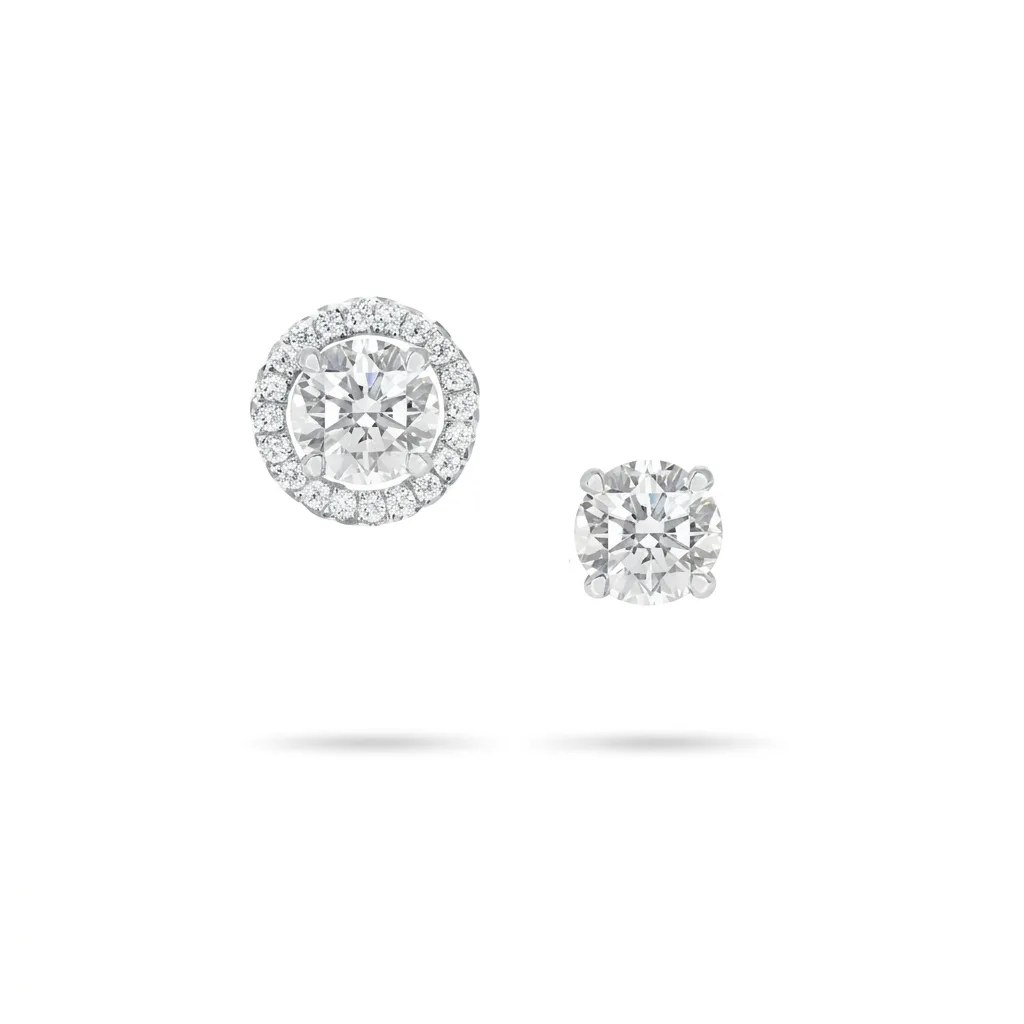
A four claw setting shows the most diamond and is the classic choice. Six claws hold more securely and keep a rounder outline. A bezel wraps the stone in metal for the most protection and a modern look, and a halo surrounds the centre with small diamonds so the stud reads larger than its centre stone alone.
Each changes the look as well as the security. Four claws can make a round diamond look slightly square from a distance; six keep it circular. A bezel makes the stone look a little smaller because metal frames its edge, but nothing catches on a jumper or a hairbrush. A halo adds presence, and some halos are made as separate jackets, so one pair can be worn plain by day and framed at night.
- Four claw: the most diamond on show, the classic stud.
- Six claw: a rounder outline and an extra margin of security.
- Bezel: a rim of metal, the most protective and the least likely to snag.
- Halo: a ring of small diamonds that makes the centre stone look larger.
What earring backs are most secure for diamond studs?
Screw backs are the most secure: the back threads onto a grooved post and cannot slide off on its own. Locking push backs, which click onto the post, come a close second and are quicker to use. Standard butterfly backs are comfortable and convenient but hold by friction, so they loosen with wear and need replacing.
Heavier studs benefit from a larger back, sometimes called a disc or a lifter, which spreads the weight across the lobe and keeps the diamond facing forward rather than drooping. If your studs tilt forward when you look in the mirror, the back is usually the cause, not the earring.
Changing the fitting is straightforward bench work. A friction post can often be replaced with a threaded post and screw back, and a tired butterfly back can be swapped for a new one. Ask about the backs when you choose studs, not after one has gone missing.
How do I keep diamond stud earrings secure every day?
Check the backs and the claws. Push each back firmly onto the post and make sure it grips; replace any butterfly back that slides on too easily. Look at every claw in good light for one that has lifted or worn thin, and bring your studs in to be checked and cleaned at least once a year.
The diamonds themselves wear beautifully, because diamond is the hardest natural material. It is the claws, posts and backs that need attention, and a quick check takes far less time than searching for a lost stud.
- Take studs out before swimming in the ocean or a pool, where a back can work loose unnoticed.
- Put them on after hairspray, perfume and sunscreen, which leave a film that dulls diamonds.
- Store each pair in its own soft pouch or compartment, because diamonds scratch other jewellery.
- Feel for the click of a locking back, or the thread of a screw back, every time you put them on.
Should the two diamonds in a pair of studs match exactly?
They should be matched as closely as possible for size, colour and brilliance, because the eye compares them side by side every time you look in the mirror. A well-matched pair looks like one decision. A mismatched pair shows its difference in daylight, most often in colour, and that difference does not fade with time.
Larger studs may come with an individual grading report for each diamond; smaller pairs usually do not. Every diamond we set is natural, and we select and match each pair in person, which matters more for studs than any number on paper.
For what each clarity grade means for small and larger diamonds, see our diamond clarity chart.
What makes one pair of studs cost more than another?
The diamonds, almost entirely: their size, cut, colour and clarity, and how closely the two are matched. The metal and setting add less, with platinum and halos toward the higher end. Two pairs that look alike in a photograph can differ widely in price because of grades the eye only notices side by side.
That is why we prefer to show studs in person rather than by number. Put a pair of well-cut, near-colourless half carats beside a larger pair of lower grades and you will usually know within a minute which you would wear more.
To see diamond studs, halo studs and drop earrings made in our workshop, browse our diamond earrings.
Try two sizes at once
The fastest way to choose studs is to wear two sizes at once, one in each ear, and look in a mirror at a normal distance. Book time at our Cottesloe atelier and we will put sizes and settings side by side in daylight, and fit the backs that suit how you live.
If you want a size, metal or setting that is not in the collection, we source natural diamonds and make the pair in our own workshop, set and finished on site.
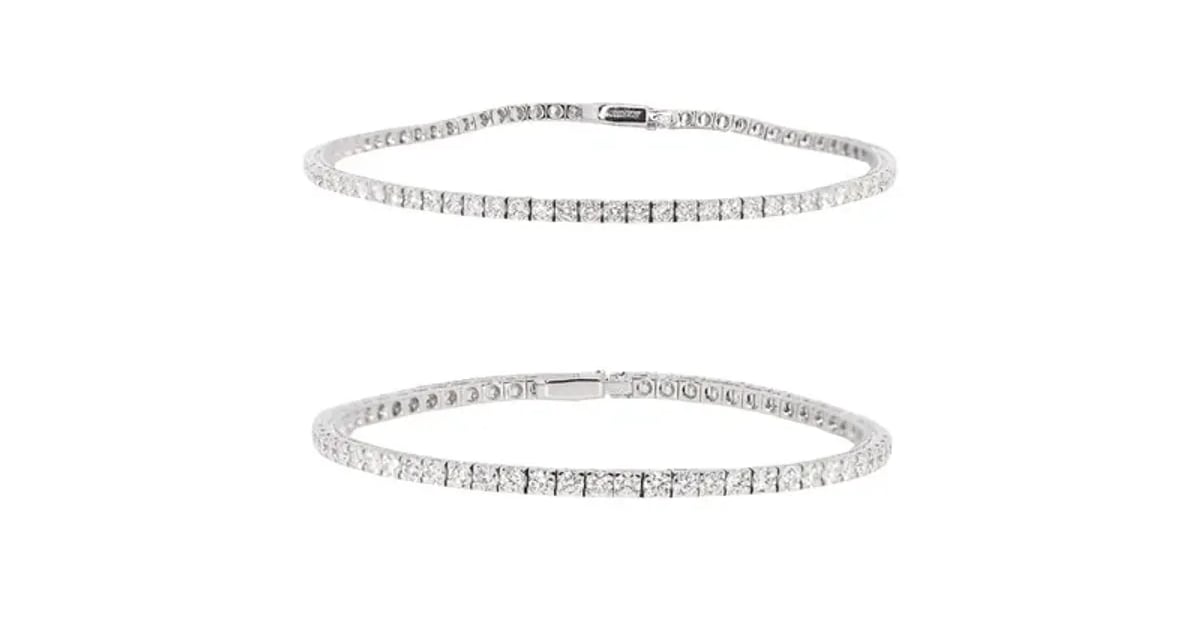
If studs are part of a wider diamond plan, our guide to choosing a diamond tennis bracelet follows the same principles of matching and fit.
Frequently asked questions
What is a good size for everyday diamond studs?
A quarter to a half carat per earring, about 4 to 5 millimetres across, suits most people for daily wear. Smaller pairs suit second piercings; from about three quarters of a carat each, studs read as a statement.
Are screw backs better than butterfly backs?
For security, yes. A screw back threads onto the post and cannot slide off by itself, while a butterfly back holds by friction and loosens with wear. Locking push backs sit in between: quick to use and far more secure than a standard butterfly.
Does a halo make diamond studs look bigger?
Yes. A halo of small diamonds around the centre stone widens the area of sparkle, so the stud reads larger than its centre diamond alone. Some halos are made as separate jackets, so the same pair can be worn plain or framed.
What does carat total weight mean for earrings?
It is the combined weight of both diamonds. A one carat total weight pair holds two diamonds of about half a carat each, roughly 5.2 millimetres across if they are well-cut round brilliants.
See sizes side by side
A calm appointment at our Cottesloe atelier: stud sizes and settings compared in daylight, and the backs fitted to suit how you live.