Diamonds · 7 min read
How to Choose a Diamond Tennis Bracelet
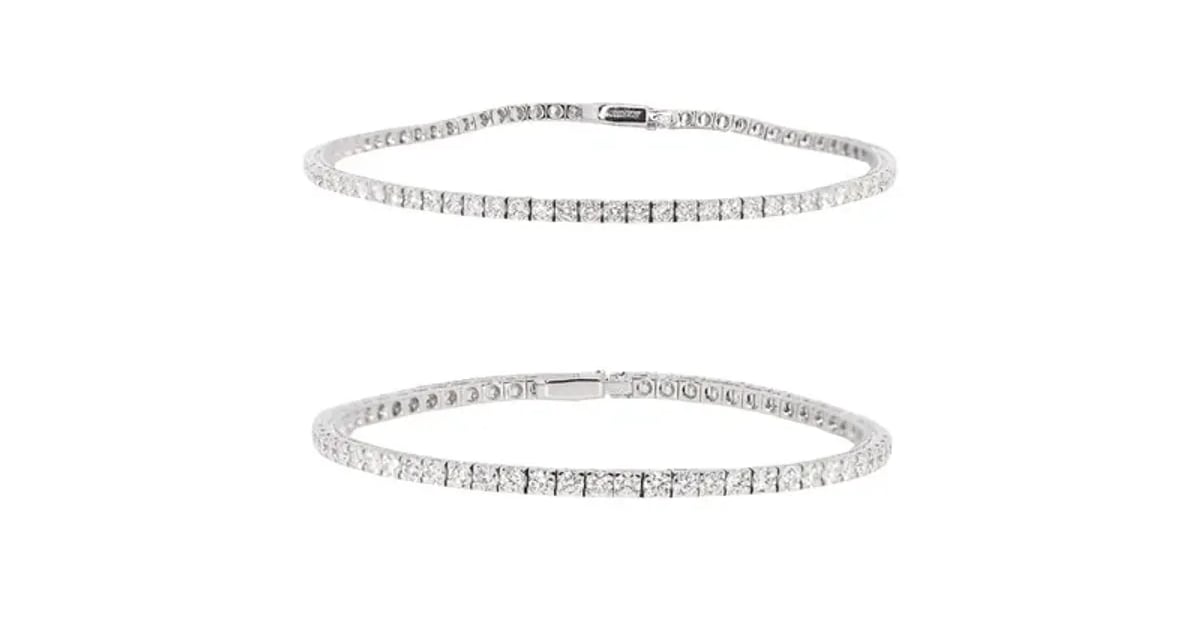
A diamond tennis bracelet looks simple: one line of stones and one clasp. Choosing one is less simple, because two bracelets that look alike in a photograph can feel quite different on the wrist, and the price gap between a fine line and a full one is wider than most people expect.
This guide uses the bracelets in our own collection in Cottesloe as the reference: real published prices, what changes as a line gets heavier, what certification means for small diamonds, and how length and the clasp decide whether a bracelet is worn every day or kept for best.
What is a diamond tennis bracelet?
A tennis bracelet is a flexible line of individually set stones, usually diamonds of a matched size, linked so the bracelet moves like fabric around the wrist. Each stone sits in its own setting, and the links between them let the line curve without the stones rubbing against each other.
The name is usually traced to the 1987 US Open, when Chris Evert paused a match to look for a diamond line bracelet that had fallen from her wrist. That story is the reason the clasp is still the first part we check on any tennis bracelet that comes across our bench.
How much does a diamond tennis bracelet cost?
As of November 2026, the 16 diamond tennis bracelets in our collection are priced from $4,980 to $54,800, with a median of $20,390. Three sit under $10,000, and half of the collection is priced at $20,000 or more. The diamonds account for most of that range, which is why bracelets of the same length can sit at either end of it.
To see the bracelets themselves, with metals and lengths listed, browse our diamond tennis bracelets in Perth.
| Price band (AUD, incl. GST) | Bracelets in the collection | Share of the collection |
|---|---|---|
| Under $10,000 | 3 | 19% |
| $10,000 to $19,999 | 5 | 31% |
| $20,000 to $29,999 | 4 | 25% |
| $30,000 and above | 4 | 25% |
What changes between a lighter and a heavier line?
Mostly the diamonds. A lighter line uses smaller stones, so it reads as a fine thread of light and sits quietly beside a watch or other bracelets. A heavier line uses larger diamonds, so there is more carat weight around the wrist and more presence from across a room. The metal follows the stones: a fuller line needs more substantial settings and links to hold them.
Diamond grades move the price as well, which is why two lines of a similar width can be thousands of dollars apart. In our collection, three 18ct white gold lines sit under $10,000; the middle of the range holds rose and yellow gold lines and two designs with colour, cognac diamonds in 18ct yellow gold at $13,780 and Ceylon sapphires with diamonds in 9ct gold at $19,800; and the fullest lines run from $34,800 in 18ct white gold to $54,800 in 950 platinum.
| Factor | Lower in the range | Higher in the range |
|---|---|---|
| Diamond size | Smaller stones in a fine line | Larger stones, so more carat weight around the wrist |
| Diamond grades | Lower colour and clarity grades, still matched along the line | Higher colour and clarity grades along the whole line |
| Metal | 18ct gold | Heavier 18ct gold settings, or 950 platinum |
| Presence | A fine thread of light beside a watch | A band of light that reads from across a room |
| Our collection, 7 November 2026 | From $4,980 in 18ct white gold | To $54,800 in 950 platinum |
Tennis bracelet or gold bangle?
A tennis bracelet and a bangle answer different wishes. A tennis bracelet is flexible and opens with a clasp, so it can sit close to the wrist and move with it, and its light comes from the diamonds. A bangle is a rigid hoop that slips over the hand, so it must clear the knuckles, and it shows far more metal than stone.
Many people end up wearing both, a fine diamond line beside a plain gold bangle, and the pairing works because the two move differently. If you are choosing one, try a line and a bangle on the same wrist; the difference in feel usually settles it within minutes.
If a bangle suits you better, our gold bangles are sized on your wrist while you visit.
Are the small diamonds in a tennis bracelet certified?
Not usually one by one. Laboratory reports such as GIA's grade individual diamonds, and the small stones in a tennis line are rarely sent for individual reports; a bracelet carrying dozens of them would need dozens of reports. What matters in a line is that every stone is natural and that they are evenly matched for colour and size, so the bracelet reads as one line rather than a row of slightly different stones.
Every diamond we set is natural, selected and inspected in person. For a significant single stone we recommend respected independent grading, most often GIA. For a tennis bracelet, the better test is your own eye in daylight: look along the line for any stone that sits darker, cloudier or smaller than its neighbours.
For what each clarity grade means, see our diamond clarity chart.
Length, clasp and everyday wear
A tennis bracelet should move freely without sliding over the hand. Too long and it catches and slips towards the knuckles; too short and the clasp is under strain every time the wrist bends. Where a length is listed, the bracelets in our collection run from 17.5cm to 18.5cm, and we fit the length on your wrist at the atelier rather than guessing from a number.
The clasp deserves as much attention as the diamonds. A box clasp with a safety catch is the usual closure on a tennis bracelet: the box holds the line closed, and the catch is a second lock if the box is ever knocked open. Diamonds are the hardest natural material, so the stones themselves wear beautifully; it is the settings and the clasp that need looking after.
- Take it off for heavy work, the gym and the garden.
- Check that the clasp and the safety catch both close with a clean click.
- Look along the line from time to time for a stone that sits higher than the rest or moves.
- Bring it in every so often for the settings and clasp to be checked and the bracelet cleaned.
Try two lines on one wrist
The quickest way to choose is to wear two bracelets at once: a lighter line and a fuller one side by side on the same wrist. Within a minute you will know whether you want a thread of light or a band of it, and whether white, yellow or rose gold suits the jewellery you already wear.
Book time at our Cottesloe atelier and we will put lines side by side in daylight, fit the length on your wrist, and check the clasp with you before anything leaves the bench. The same workshop looks after the bracelet for years afterwards, from a clasp that has grown tired to a setting that needs tightening.
Frequently asked questions
How much does a diamond tennis bracelet cost?
As of November 2026, the 16 diamond tennis bracelets in our collection range from $4,980 to $54,800, with a median of $20,390. Three are priced under $10,000. The price rises mainly with the size and grades of the diamonds, and with the metal, up to 950 platinum.
Are the diamonds in a tennis bracelet certified?
The small diamonds in a tennis line are rarely graded one by one, because laboratory reports such as GIA's cover individual stones. What matters is that every stone is natural and evenly matched. Every diamond we set is natural, and we are happy to talk through the stones in any bracelet at the showroom.
What length should a tennis bracelet be?
Long enough to move freely without sliding over the hand. Where a length is listed, the bracelets in our collection run from 17.5cm to 18.5cm, and we fit the length on your wrist at the Cottesloe atelier, adjusting links where the design allows.
Should I choose a tennis bracelet or a gold bangle?
A tennis bracelet is flexible and closes with a clasp, so it sits close and moves with the wrist; a bangle is a rigid hoop that slips over the hand and shows more metal. Many people wear both. Try the two side by side at the atelier and the difference in feel settles it quickly.
See the difference on your wrist
A calm appointment at our Cottesloe atelier: tennis bracelets side by side in daylight, the length fitted on your wrist, and the clasp checked before you decide.