Engagement · 5 min read
Which Ring Goes First, Engagement or Wedding Ring? And Which Finger?
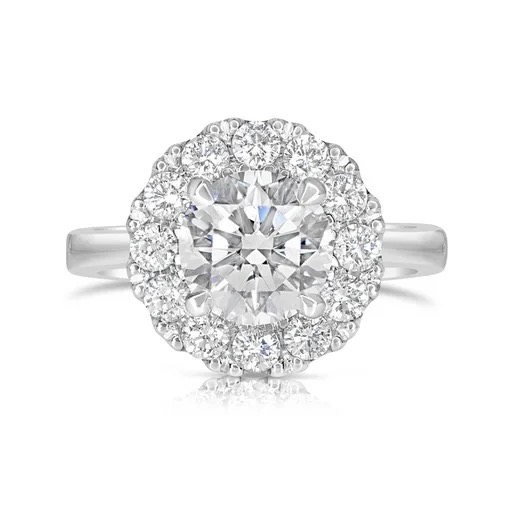
Two rings, one finger, and a surprising amount of advice. Couples ask us which ring goes on first almost as often as they ask about metals, usually a few weeks before the wedding and usually because two relatives have told them opposite things.
Here is how it traditionally works in Australia, how it differs overseas, and the practical side we see at the bench: making two rings sit together comfortably for the next fifty years.
Which ring goes first, the engagement ring or the wedding ring?
Traditionally the wedding band goes on first, so it sits closest to the hand, and the engagement ring sits above it. On the wedding day many people move the engagement ring to the right hand, receive the band on the left ring finger during the ceremony, then return the engagement ring on top afterwards.
It is a tradition rather than a rule. Some people wear the engagement ring closest to the hand because it sits better there, and some wear one ring on each hand. The right order is the one that is comfortable and secure on your finger.
Which finger does an engagement ring go on in Australia?
In Australia the engagement ring and the wedding band are both worn on the fourth finger of the left hand, the finger between the middle finger and the little finger. The same convention holds in the United Kingdom, New Zealand, the United States, France and Italy.
The old explanation is the vena amoris, a belief that a vein ran from that finger straight to the heart. Anatomy does not support it, but the custom has outlived the theory by a very long time.
Where each ring is traditionally worn
Most couples end up wearing two or three rings on the same finger over the years. This is the usual pattern in Australia, and the point at which each ring joins the stack.
| Ring | Where it is worn | Order and tradition |
|---|---|---|
| Engagement ring | Left hand, fourth finger | Worn alone from the proposal until the wedding |
| Wedding band | Left hand, fourth finger | Goes on first at the ceremony and sits closest to the hand |
| Engagement ring after the wedding | Left hand, fourth finger | Returns to the finger above the wedding band |
| Eternity ring | Left hand above the pair, or the right hand | Often given for an anniversary or the birth of a child |
Do some countries wear the wedding ring on the right hand?
Yes. In Germany, Austria, Norway, Denmark and Poland the wedding ring is traditionally worn on the right hand, and in Russia and Greece both rings usually sit on the right. In Italy, where our family began in Rome, both rings sit on the left, as they do here.
If you are marrying across two traditions, there is no wrong answer. Wear the rings the way that honours both families, whether that means one ring on each hand or switching hands after the ceremony, and tell us before the band is made so the fit suits the finger it will actually live on.
Do you wear your engagement ring on your wedding day?
Most people do, just not on the left ring finger during the ceremony. Moving it to the right hand for the morning keeps the finger clear for the band, and it means nothing is fumbled at the altar. After the ceremony, slide the band on first and the engagement ring back on top.
If the engagement ring is being resized, cleaned or has its claws checked before the wedding, allow at least a few weeks so it comes back in time. We check claws and polish rings in our Cottesloe workshop.
Making two rings sit together comfortably
The real question is not the order but the fit. A straight band can leave a gap against a curved or low-set engagement ring, and two rings that knock against each other wear each other down. A band shaped to the engagement ring's profile closes the gap and lets the two sit as one.
Matching the metal of the engagement ring keeps the colour even and the wear predictable. Bring the engagement ring to the appointment, even if we did not make it, so the band is made to the actual piece rather than a catalogue curve.
For flush fit bands, men's bands and ready-made pieces, see our wedding bands in Perth.
Where does an eternity ring go?
An eternity ring is usually worn on the same finger, above the engagement ring or between the band and the engagement ring, depending on how the three sit together. Some people prefer it on the right hand so the left stays as it was on the wedding day.
A full eternity ring, with diamonds all the way around, is harder to resize later than a half eternity, so sizing matters more. We fit eternity rings against the rings they will live beside before anything is finished.
Full and half diamond eternity bands made in Cottesloe are on our eternity rings collection.
Frequently asked questions
Which goes on first, the engagement ring or the wedding band?
Traditionally the wedding band goes on first so it sits closest to the hand, with the engagement ring above it. It is a custom, not a rule: some people prefer the reverse because it sits better, and that is perfectly fine.
Which hand does the wedding ring go on in Australia?
The left hand. In Australia both the engagement ring and the wedding band are traditionally worn on the fourth finger of the left hand, as they are in the United Kingdom, New Zealand, the United States and Italy.
What do you do with the engagement ring during the ceremony?
Many people move it to the right hand on the morning of the wedding, receive the wedding band on the left ring finger during the ceremony, then place the engagement ring back on top of the band afterwards.
Do men wear their wedding ring on the same finger?
Yes. In Australia men traditionally wear the wedding band on the fourth finger of the left hand too. Men's bands are usually wider and heavier, so a comfort-fit profile matters more than on a fine band.
Can I wear my engagement ring and wedding band on different hands?
Yes. Some people wear the engagement ring on the right hand after the wedding, especially when the two rings do not sit comfortably together or a family tradition calls for it. Comfort and security matter more than convention.
Match the band to the ring
Bring your engagement ring to our Cottesloe workshop and we will make or match a band that sits flush against it.