Engagement · 7 min read
Engagement Ring Settings Explained: Solitaire, Halo, Trilogy and Bezel
The setting is the metal that holds the stone and the shape of the ring around it. It decides how much of the diamond you see, how the ring sits beside a wedding band, and how well it copes with the life your hands lead. Two rings with identical diamonds can look and wear completely differently because of it.
This guide explains the main settings we make in our Cottesloe workshop, how many claws a stone needs, why height matters, and which designs hold up best day to day. Choosing the stone itself is covered in our other guides; this one is about what holds it.
What are the main types of engagement ring setting?
Most engagement rings use one of four settings. A solitaire holds a single stone, usually in claws. A halo surrounds the centre stone with a ring of small diamonds. A trilogy sets three stones side by side. A bezel wraps the stone in a continuous rim of metal. Any of them can sit on a plain or a pavé band.
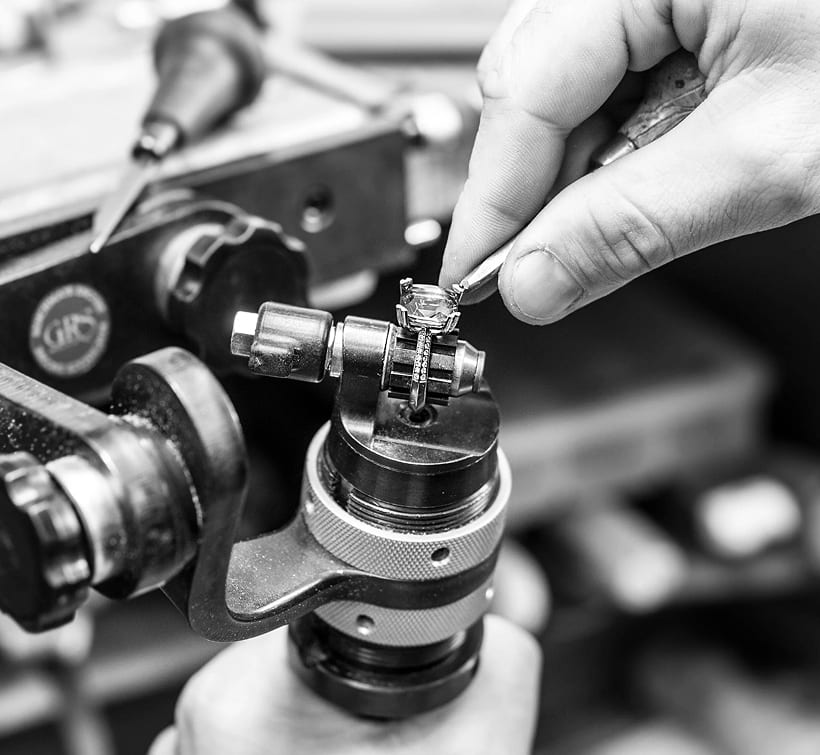
Within each there are endless variations: the shape of the claws, the height of the stone, the taper of the shoulders and the gallery beneath. Those details are where a ring made by hand differs from one made in a mould, and they are worth looking at closely before you decide.
| Setting | How it holds the stone | The look | Day to day wear |
|---|---|---|---|
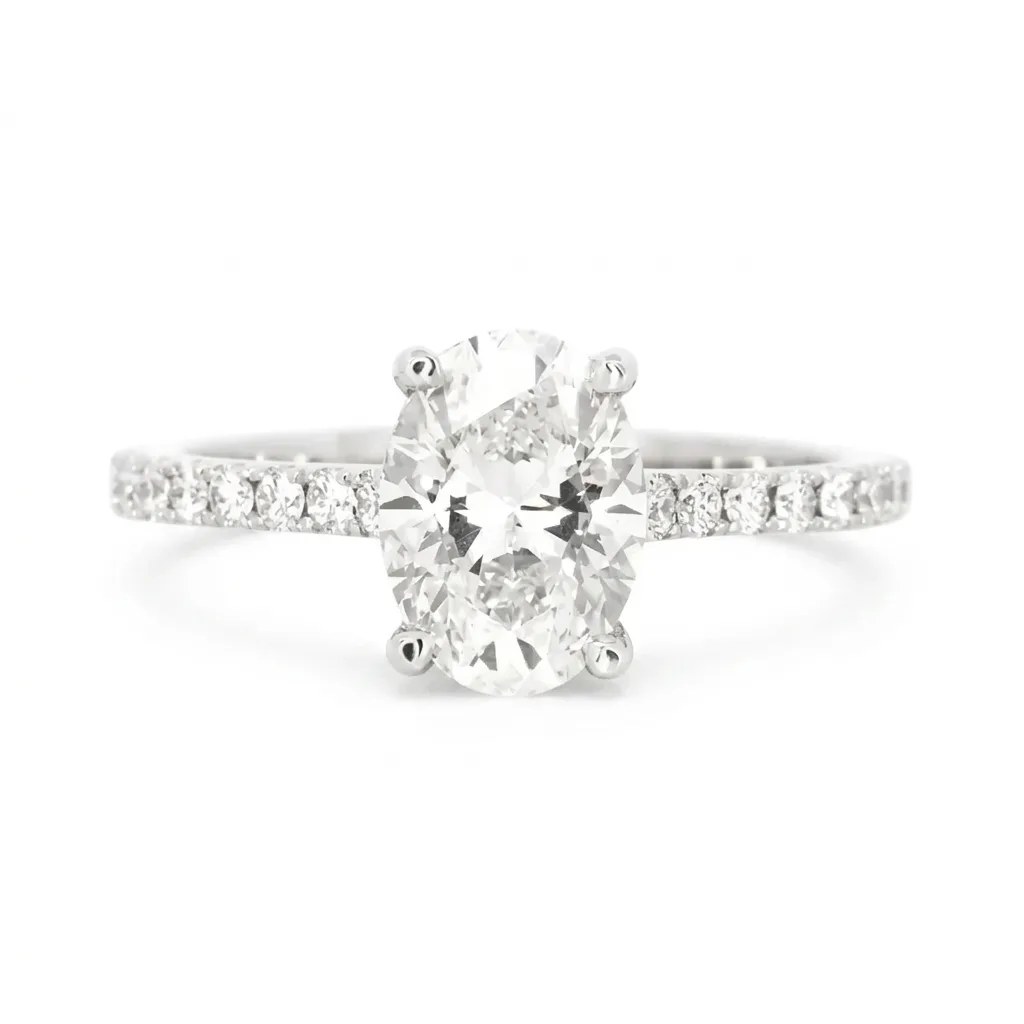
| Solitaire, four claw | Four claws grip the centre stone | The most diamond on show; a round can look slightly square | Excellent when set low; claws need checking over the years |
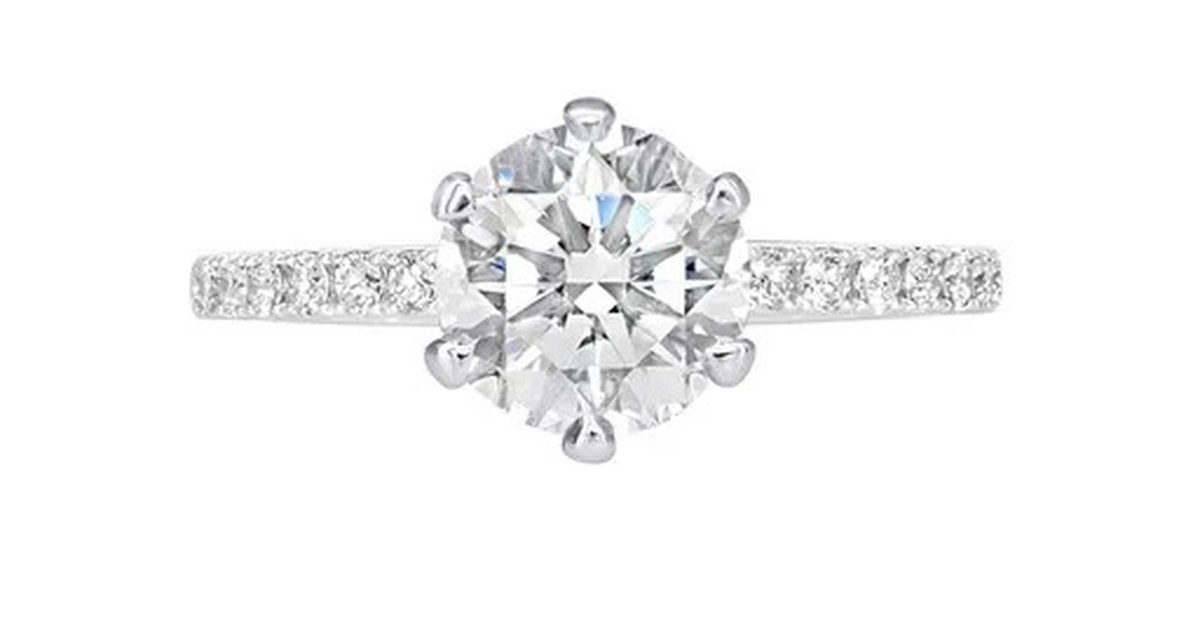
| Solitaire, six claw | Six claws spread the grip around the stone | A rounder outline, with a little more metal at the edge | Very good; if one claw lifts, five still hold |
| Halo | A centre stone in claws, framed by small pavé diamonds | The centre reads larger, with more sparkle | Good; the small stones need periodic checks |
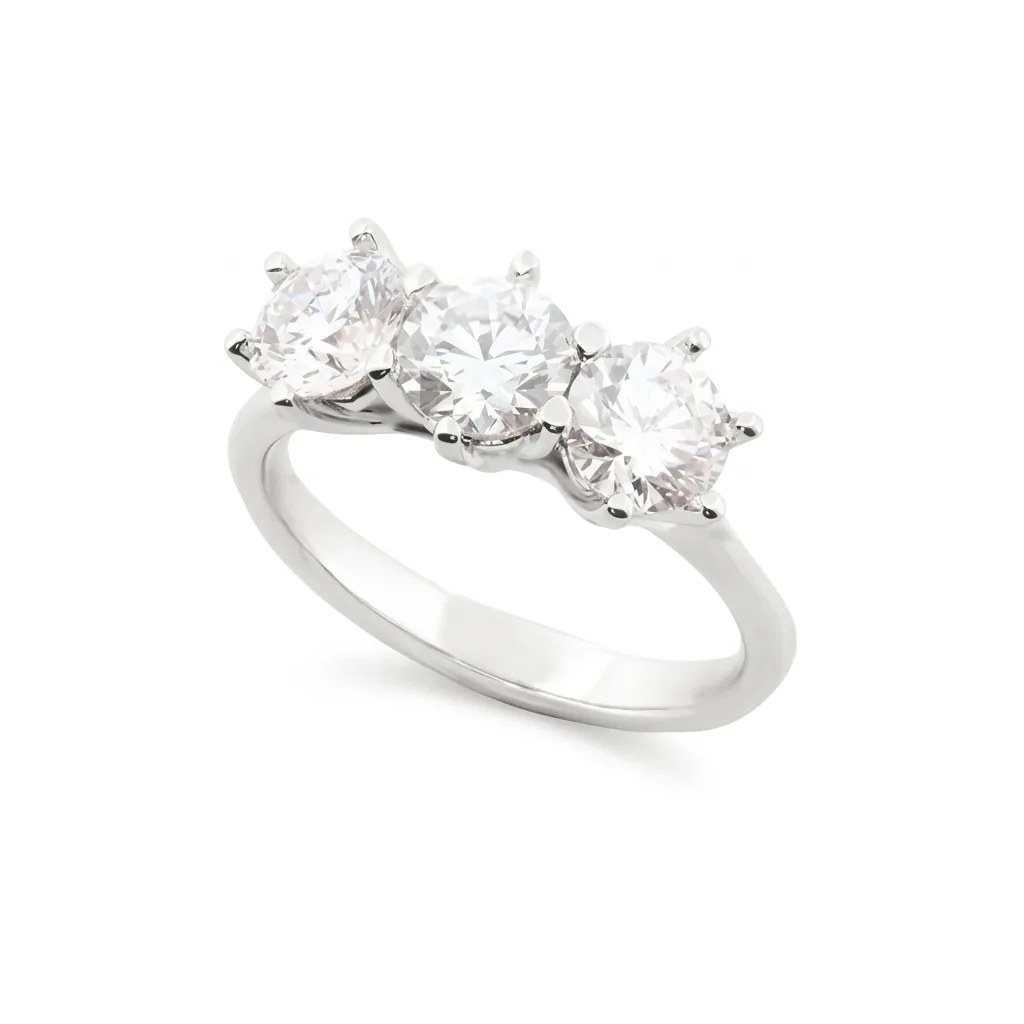
| Trilogy | Three stones side by side, each in claws | Width across the finger and a balanced line | Good; more claws to check and a wider face to knock |
| Bezel | A continuous rim of metal around the stone | Clean and modern; the stone looks a little smaller | The most protective; nothing to catch or lift |
Is a solitaire setting a good choice for an engagement ring?
Yes. A solitaire is the simplest setting and, for many people, the most lasting: one stone held in claws on a plain or pavé band. It shows the diamond with nothing to distract from it, pairs easily with almost any wedding band, and has the fewest parts to maintain over decades of daily wear.
Because a solitaire puts everything on the centre stone, its quality shows. The finishing of the claws, the gallery beneath the stone and the taper of the shoulders are where the hours of handwork go. A hidden halo, a row of small diamonds tucked beneath the centre stone, adds a flash of sparkle from the side while keeping the clean outline.
To see four and six claw solitaires made in our workshop, browse our solitaire engagement rings.
How many claws should an engagement ring have?
Four or six claws, for most round diamonds. Four claws show more of the stone and give a crisp, slightly square outline. Six claws hold more securely and keep the outline round, and if one claw is damaged the stone is still held. For pointed shapes such as a pear or marquise, a protective V claw guards each tip.
The number matters less than how the claws are made. A claw should be thick enough to last, shaped so it does not catch, and seated firmly over the edge of the stone. Split or double claws, where each claw divides into two fine points, add a delicate look and more points of grip.
Claws wear down slowly with every knock, so we check them whenever a ring comes in, and re-tip them in our workshop long before they become thin enough to worry about.
Does a halo setting make the diamond look bigger?
Yes. A halo of small diamonds around the centre stone widens the area of sparkle, so the ring reads larger than the centre diamond alone, and the halo's metal edge gives the centre some protection from side knocks. The trade is more small stones and more fine metalwork to look after over the years.
A halo also changes how a wedding band sits. Because it widens the head of the ring, a straight band can leave a gap, so many halo rings are paired with a band shaped to sit flush against them. It is worth planning the band at the same time as the ring.
To see round, oval, pear and cushion halos, browse our halo engagement rings.
What does a trilogy ring mean, and how does it wear?
A trilogy ring sets three stones side by side, and the three are often said to stand for past, present and future. It sits wider across the finger than a solitaire, which gives it presence, and it suits three matched diamonds or a centre diamond flanked by sapphires, pears or other side stones.
With three stones there are more claws and a wider face that meets door frames and bag straps. That is no reason to avoid a trilogy, but it is a reason to choose one set low and solidly, and to have the claws checked from time to time. The ring at the top of this page holds three round brilliant diamonds, each claw set, in 950 platinum.
To see three stone rings in diamonds and coloured stones, browse our trilogy engagement rings.
Which engagement ring setting is best for everyday wear?
A bezel is the most protective setting for everyday wear, because a rim of metal guards the whole edge of the stone and nothing can snag. A low-set six claw solitaire comes close. Halos and trilogies wear well too, but they have more small parts to check. Your work and hobbies matter as much as the ring itself.
Setting height matters as much as style. A high setting lifts the stone to catch more light and lets a straight band slide beneath it, but it is more exposed to knocks and catches on knitwear and gloves. A lower setting sits closer to the finger and is kinder to busy hands. People who work with their hands, from nurses to gardeners, often choose a bezel or a low six claw setting.
Whatever the setting, take the ring off for the gym, the garden and the beach. Weights, soil and sand wear claws far faster than ordinary days do.
For how the hardness of each gemstone affects everyday wear, see the best gemstones for engagement rings.
See settings side by side
Settings are easier to judge on the hand than on a screen. At our Cottesloe atelier we put a solitaire, a halo, a trilogy and a bezel side by side on your finger, so you can feel the height of each, see how it sits beside a band, and decide which suits the life your hands lead.
Every setting we make is designed, made, set and finished in our own workshop, with natural diamonds and gemstones. If none of the finished rings is right, a bespoke commission usually takes four to eight weeks from an approved design.
For finished rings and bespoke commissions together, explore our engagement and wedding collection.
Frequently asked questions
What is the most secure engagement ring setting?
A bezel, because a continuous rim of metal surrounds the stone and nothing can catch or lift. A low-set six claw solitaire is a close second. Any setting stays secure for longer when the claws are checked regularly and the ring comes off for heavy work.
Is four or six claws better for an engagement ring?
Four claws show more diamond and give a crisper outline; six hold more securely and keep a round stone looking round. Both are sound when the claws are well made. If you are hard on your hands, six is the safer choice.
Does a halo setting make a diamond look bigger?
Yes. The ring of small diamonds widens the sparkle, so the ring reads larger than the centre stone alone. Halos often need a shaped wedding band to sit flush, so plan the band at the same time.
Can I change the setting of my engagement ring later?
Usually, yes. A stone can be removed and reset into a new design when a ring has worn or tastes have changed. We do this in our Cottesloe workshop and check the stone carefully before and after it is reset.
Try settings on your hand
A calm appointment at our Cottesloe atelier: solitaire, halo, trilogy and bezel settings side by side on your finger, with an honest view on how each will wear.