Engagement · 7 min read
Oval Engagement Rings: Ratios, Settings and What to Look For
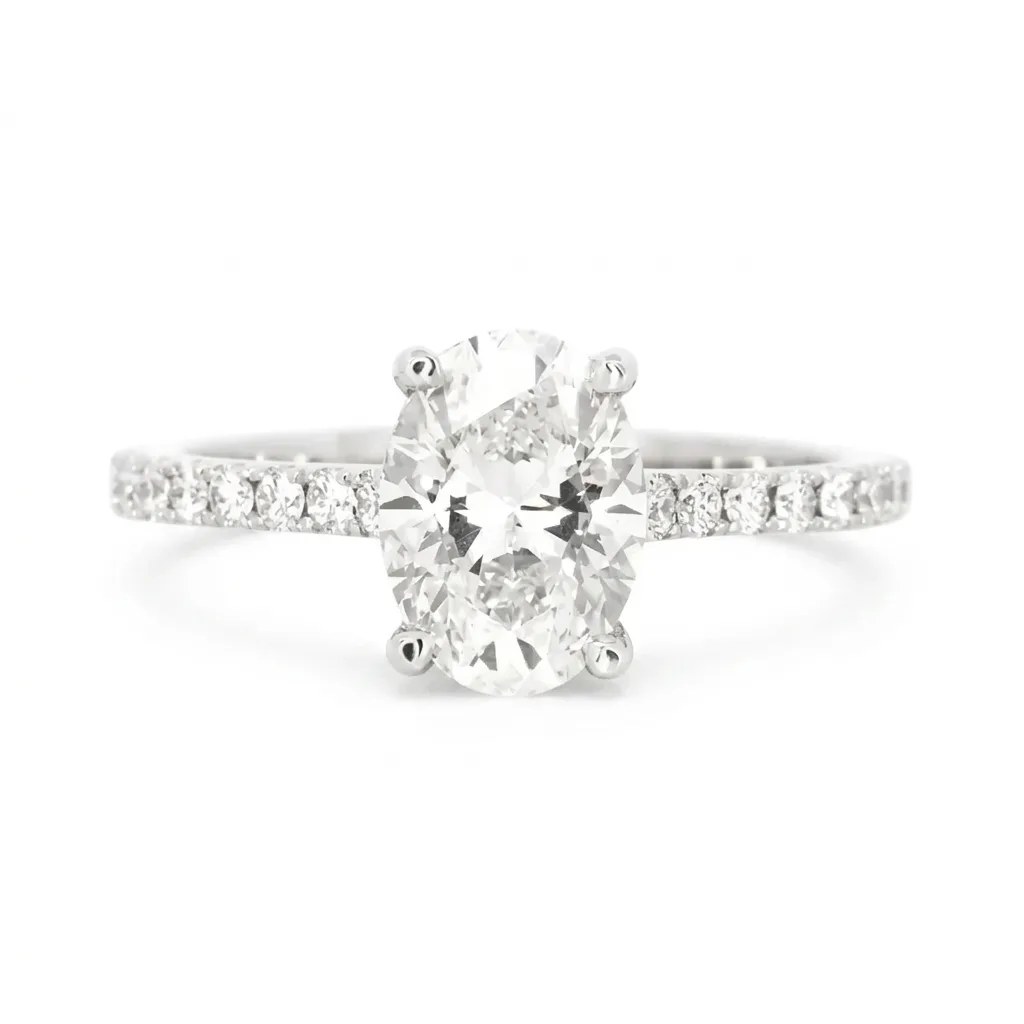
An oval diamond has the sparkle of a round brilliant in a longer, softer outline, so it reads larger on the hand and draws the finger out. That combination is a large part of its appeal. Ovals also vary more from one stone to the next than most shapes, which is why choosing one well takes a closer look.
This guide stays with the decisions that are particular to ovals: the length to width ratio, the dark bow-tie some stones show, which setting suits the shape, and where the money goes. For the wider choice of stone, metal and budget, our general engagement ring guide covers the ground.
If you are still deciding on the basics, start with how to choose an engagement ring.
Why choose an oval engagement ring?
An oval gives you the brilliance of a round diamond in a longer, gentler shape. It faces up larger than a round of the same carat weight, lengthens the look of the finger, and has no sharp points to chip. It sits as comfortably in a plain solitaire as it does in a halo or a trilogy.
Ovals are cut in the brilliant style, with facets radiating from the centre, so they sparkle the way most people picture a diamond sparkling. The rounded ends mean there are no fragile tips to protect, unlike a pear or a marquise, and an oval can sit north to south along the finger or be turned east to west across it for something less expected.
What is the best length to width ratio for an oval diamond?
Most classic ovals fall between about 1.30 and 1.50, meaning the stone is 1.3 to 1.5 times as long as it is wide. Below that range an oval looks fuller and rounder; above it, slender and elongated. There is no correct number: the best ratio is the one that suits the hand wearing it.
Ratio works with the finger. A longer oval on a slender finger looks elegant; the same stone on a broader finger can look narrow. A fuller oval shows more width across the finger and a softer outline. We put ovals of different ratios side by side on the hand, because a number on a report rarely tells you how a stone will feel to wear.
| Ratio (length to width) | How it looks | Often suits |
|---|---|---|
| Under 1.30 | Fuller and rounder, close to a round from a distance | Anyone who wants a soft outline with a little length |
| 1.30 to 1.40 | Balanced and classic, clearly oval | Most hands: the dependable middle |
| 1.40 to 1.50 | Longer and a little slimmer | Slender or longer fingers, and anyone who wants the oval to read as an oval |
| Over 1.50 | Long and slender, with a dramatic line | A bold look; check the bow-tie closely |
What is the bow-tie in an oval diamond?
The bow-tie is a darker band across the middle of an oval, shaped like a bow-tie, where light escapes instead of returning to your eye. Almost every oval shows some, because of how the shape is cut. What matters is its strength: a faint, shifting bow-tie adds contrast, while a heavy, fixed one dulls the stone.
A grading report does not grade the bow-tie, so the only way to judge it is to look at the diamond itself, in daylight and under showroom light, and rock it gently. In a well-cut oval the dark band flickers in and out as the stone moves. If the centre stays dark whichever way you hold it, keep looking.
For what a grading report does cover, line by line, see how to read a GIA diamond certificate.
Which setting suits an oval diamond?
A four claw setting is the most common choice for an oval: one claw at each shoulder of the stone shows the most diamond and keeps the outline clean. Six claws add security and soften the look, a halo makes the oval read larger, and a bezel gives the most protection for active hands.
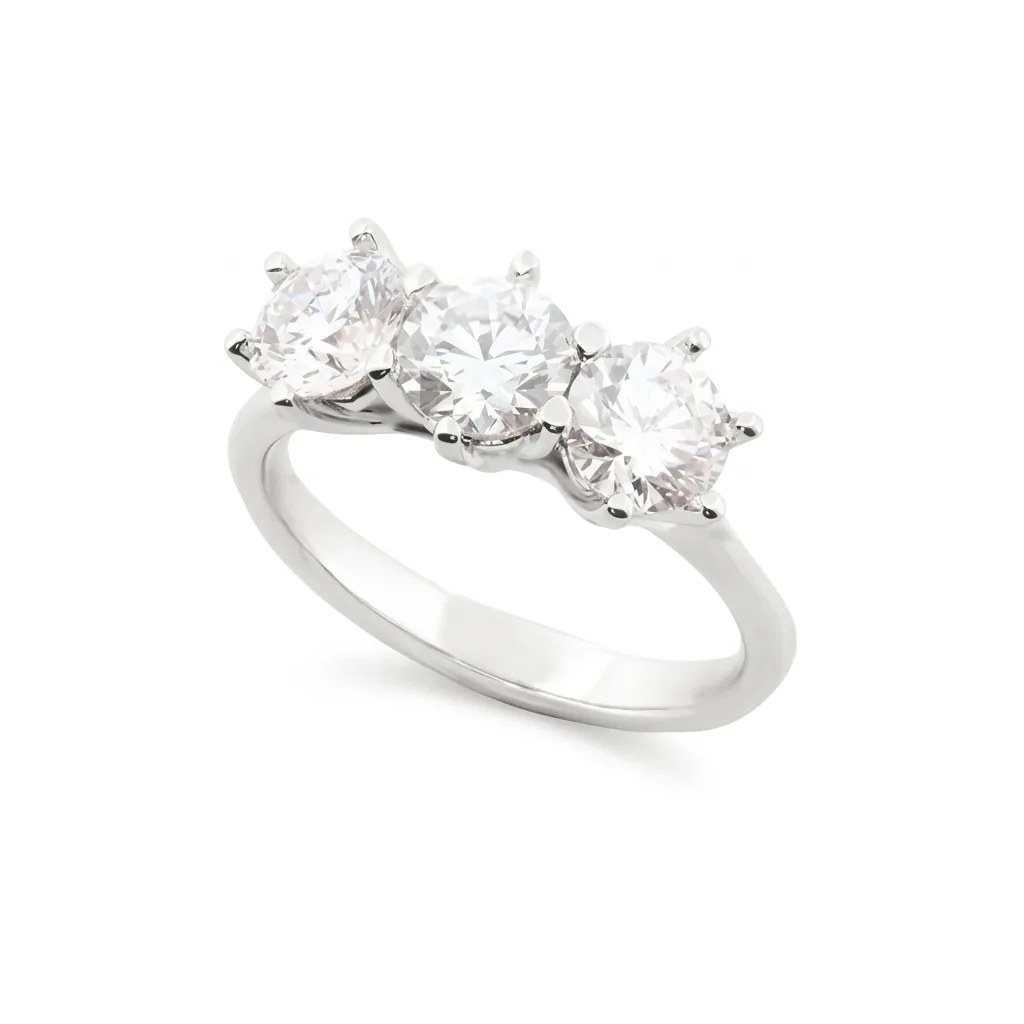
Claw placement matters more on an oval than on a round. The claws should hold the stone firmly without biting into the curve of its ends, and the setting height should let a wedding band sit neatly beside it. On the ring at the top of this page, four claws hold an oval diamond above a pavé band in 950 platinum.
For a fuller comparison of solitaire, halo, trilogy and bezel designs, read engagement ring settings explained.
Does an oval diamond look bigger than a round?
Usually, yes. Because an oval spreads its weight along a longer outline, it shows more surface face up than a round brilliant of the same carat weight, so it tends to look larger on the hand. A shallow, poorly cut oval can look bigger still, but it pays for that with less brilliance.
That is the trade worth understanding. Spread without good cut gives a stone that looks large but lifeless, often with a heavy bow-tie. A well-proportioned oval gives you both presence and light. The same principle runs through every diamond decision, and it is why we weigh cut before carat.
For why a smaller, better cut diamond often outshines a larger one, read why cut beats carat.
What does an oval engagement ring cost?
The centre diamond sets most of the price: its carat weight, colour, clarity and cut. The metal and the setting follow. As of November 2026, the oval diamond solitaires in our collection range from $6,580 in 18ct yellow gold to $29,800 in 950 platinum, and most of the gap between them is the diamond.
Fancy shapes such as the oval often cost less per carat than a round brilliant of similar grades, partly because cutting a round loses more of the rough crystal. Price still follows the individual stone, so two ovals of the same weight can be far apart once colour, clarity and the strength of the bow-tie are weighed.
To see oval solitaires, halos and trilogies made in our workshop, browse our oval engagement rings.
Can an oval engagement ring have a coloured stone?
Yes. Sapphires and rubies are hard enough for daily wear and are often cut as ovals, a shape that shows their colour generously. Softer stones such as emerald, aquamarine and tanzanite also look beautiful as ovals, but they need a more protective setting and more care over the years of wearing.
Colour changes how the setting is chosen. A deep blue sapphire can take a slim claw setting; an emerald does better with a halo or a bezel guarding its edge. We set only natural stones, and we talk through how each will age on the hand before anything is made.
For how each stone ranks for hardness and everyday wear, see the best gemstones for engagement rings.
Choosing an oval in person
Ovals differ more from stone to stone than rounds do, so the surest way to choose is to see several together: different ratios and different bow-ties, on your own hand, in daylight. At our Cottesloe atelier we lay ovals out side by side and talk through which settings will flatter each one.
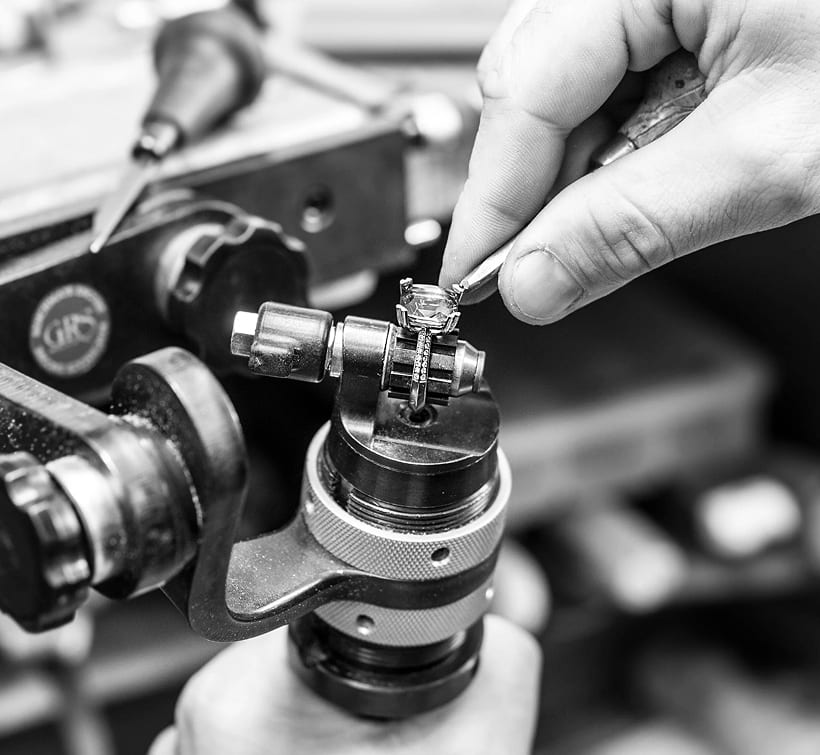
If the right stone is not already in a finished ring, we source natural diamonds for a bespoke commission and make the ring in our own workshop, usually within four to eight weeks of an approved design.
Frequently asked questions
What is the best ratio for an oval engagement ring?
Most classic ovals sit between about 1.30 and 1.50. Lower ratios look fuller and rounder; higher ratios look longer and slimmer. The best ratio depends on the hand, so it is worth trying two or three side by side before deciding.
Do all oval diamonds have a bow-tie?
Most show some, because of how the shape returns light. A faint bow-tie that moves as the stone moves is normal and can add contrast. A heavy dark band that stays fixed is the one to avoid, and you can only judge it by looking at the diamond itself.
How many claws should an oval engagement ring have?
Four claws is the most common choice and shows the most diamond. Six claws add security and give a softer outline. Both work well when the claws are placed and finished properly; how you use your hands is the better guide.
Does an oval diamond look bigger than a round diamond?
Usually, yes. An oval of the same carat weight shows more surface face up, so it tends to look larger on the hand. Cut still matters most: a well-proportioned oval looks larger and brighter, while a shallow one looks large but dull.
See ovals side by side
A calm appointment at our Cottesloe atelier: ovals of different ratios on your hand in daylight, settings compared, and a straight answer on each stone's bow-tie.