Diamonds · 7 min read
Half vs Full Eternity Rings: Comfort, Resizing and When to Give One
An eternity ring is a band set with a continuous line of matched stones, usually diamonds. The question we hear most about them at the bench is simple: half or full? The two look alike in a tray, but they wear differently, they age differently, and only one of them can comfortably change size later.
This guide sets out the difference plainly, the resizing limits that come with each, the setting styles worth knowing, and the moments when people traditionally give one.
For which finger an eternity ring goes on, and in what order, see which ring goes first.
What is the difference between a half and a full eternity ring?
A full eternity ring is set with stones the whole way around the band. A half eternity carries stones across the top of the finger, roughly half the circumference, with plain metal underneath. Full gives an unbroken line of light from every angle; half is more comfortable, wears better and can usually be resized.
Between the two sits the three quarter eternity, which runs stones most of the way around and leaves a short plain section at the palm. It gives almost the look of a full band with much of the practicality of a half, and it is a sensible middle path for anyone who wants more sparkle but expects their size to change.
| Consideration | Half eternity | Full eternity |
|---|---|---|
| Where the stones sit | Across the top of the finger, plain metal beneath | All the way around the band |
| Look | Stones face up where they are seen | An unbroken line of light from every angle |
| Comfort | Plain metal at the palm sits smoothly against the fingers either side | Stones at the palm can press against neighbouring fingers |
| Wear | Stones are kept away from the surfaces your palm grips | Stones underneath meet handles, rails and weights |
| Resizing | Usually possible through the plain section | Very limited; often a new band in the new size |
| Diamonds and making | Fewer stones and less setting time | About twice the stones, each matched and set by hand |
Can an eternity ring be resized?
A half eternity usually can, often by a size or so either way, because the jeweller cuts and adjusts the plain metal beneath the finger without disturbing the stones. A full eternity usually cannot in any meaningful way: there is no plain metal to work with, and stretching a set band risks loosening the diamonds.
Sometimes a full band can move by a very small amount, depending on how it is set, and sometimes stones can be added or removed when a band is remade. More often the honest answer is a new band in the right size. That is why we size full eternity rings with unusual care: on the finger, at different times of day, and against the engagement ring they will sit beside.
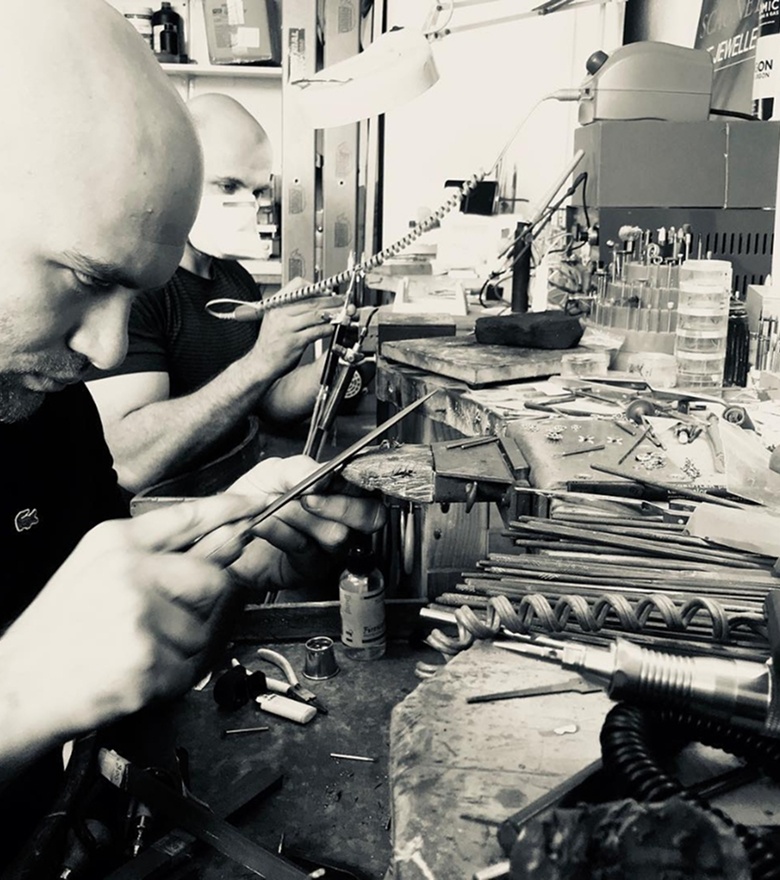
Fingers change with the seasons, with pregnancy and with the years. If you expect your size to move, a half or three quarter band is the practical choice. Resizing a half eternity in our Cottesloe workshop usually takes one to two weeks.
For what resizing involves at the bench, see our guide to jewellery repairs and resizing in Perth.
Is a half or full eternity ring more comfortable to wear every day?
A half eternity is usually the more comfortable everyday ring. Plain metal at the palm sits smoothly against the fingers either side and takes the knocks of gripping, carrying and lifting. A full band feels wonderful at rest, but the stones underneath can press on neighbouring fingers and take wear the top of the ring never sees.
If you wear your rings at the gym, in the garden or at the beach, the stones on the underside of a full band meet bars, handles and sand far more than the ones on top. Many people with a full eternity simply take it off for those moments, and that works well. The real question is whether you will.
Which setting is best for an eternity ring?
Claw settings show the most diamond and let light in from the sides. Channel settings hold stones between smooth rails of metal and snag less. Bezel settings wrap each stone in metal for the most protection, and pavé rows of small diamonds give a fine, continuous sparkle. The best choice depends on how you use your hands.
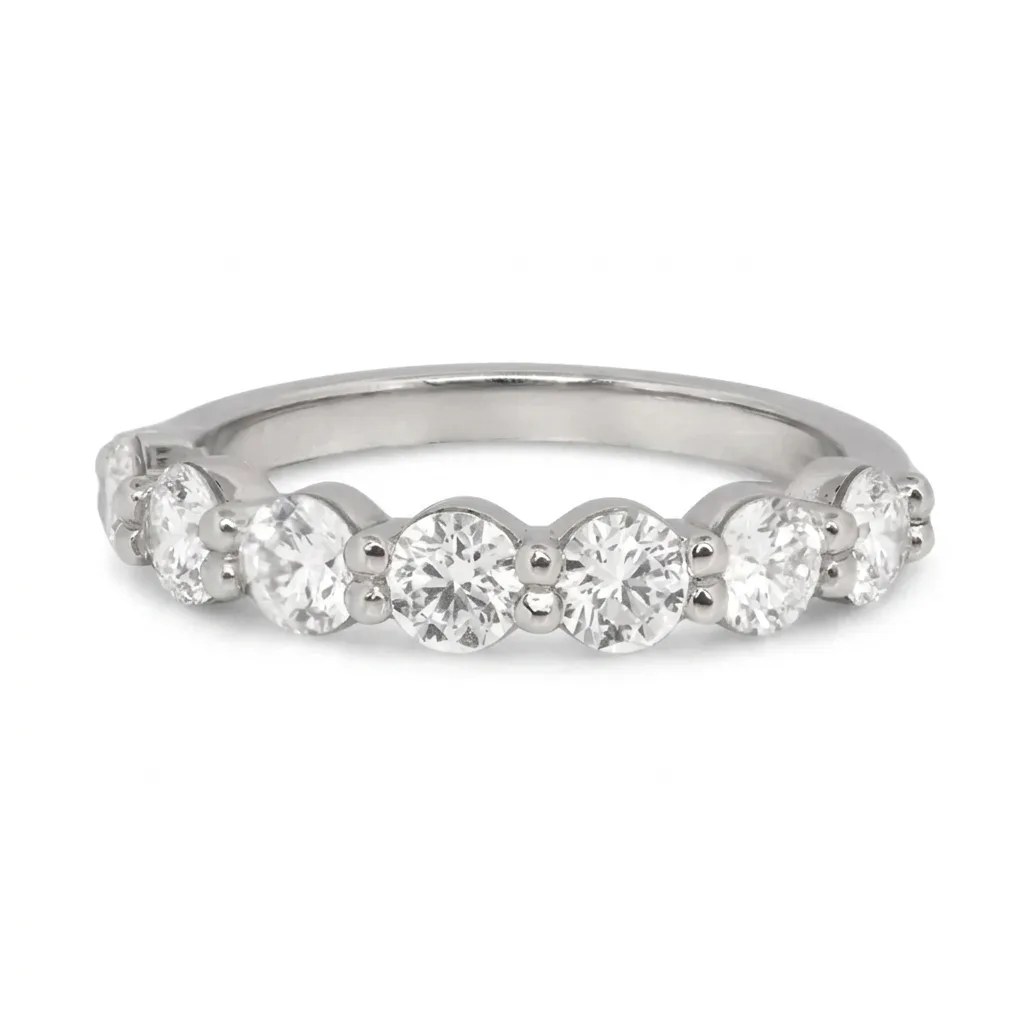
Shared claws keep the line of diamonds close and bright, as on the platinum half eternity at the top of this page, where pairs of claws sit between each stone. Diamond shape changes the look as well: round brilliants sparkle, while emerald cuts and baguettes give a quieter, mirrored flash.
If the eternity ring will sit beside an engagement ring, bring that ring in, even if we did not make it. The height of the claws, the curve of any halo and the width of both bands decide whether the two sit flush or leave a gap.
When is an eternity ring given?
There is no fixed rule. Eternity rings are most often given to mark a milestone: a significant wedding anniversary, the birth of a child, or a moment a couple wants to remember. Many are also worn as the wedding band itself, chosen alongside the engagement ring so the two sit together from the very start.
Some couples choose the first anniversary, others wait for the tenth or a later milestone, and some give one for no occasion at all. If it is a surprise, the size is the hard part, especially for a full band. A ring the wearer already has on that finger is the best guide.
For discreet ways to find a ring size without asking, read how to size a surprise ring.
What drives the price of an eternity ring?
Mostly the diamonds: how many, how large and of what grades. A full band carries roughly twice the stones of a half band in the same design, and every one is matched and set by hand. Metal and setting style follow, with platinum and more intricate settings at the higher end of any range.
As of November 2026, our collection includes a half claw eternity ring in 18ct white gold at $3,580, a full claw set eternity ring in 18ct white gold at $7,780, and the claw set half eternity ring in 950 platinum pictured above at $12,280. The difference between them is mostly the diamonds, then the metal.
To see full and half bands in claw, channel, bezel and pavé settings, browse our diamond eternity rings.
Size it once, at the bench
An eternity ring is the one ring where the first size really matters. Book time at our Cottesloe atelier and we will size you on the day, compare half, three quarter and full bands on your hand, and check how each sits against your engagement ring.
If the right band is not in the collection, we make one to order in our own workshop with natural diamonds, usually within four to eight weeks of an approved design.
Frequently asked questions
Is a half or full eternity ring better?
Neither is better in every way. A full eternity gives an unbroken line of diamonds; a half eternity is more comfortable, wears better at the palm and can usually be resized. If you expect your size to change or work with your hands, a half or three quarter band is the practical choice.
Can a full eternity ring be resized?
Rarely in any meaningful way. With stones all the way around there is no plain metal to adjust, and stretching a set band risks loosening the diamonds. Very small changes are sometimes possible, but more often a different size means a new band, so we size full bands carefully up front.
When do you give an eternity ring?
Usually to mark a milestone, such as a first or tenth wedding anniversary or the birth of a child, though there is no fixed rule. Many eternity rings are also worn as the wedding band, chosen together with the engagement ring.
Can an eternity ring be used as a wedding band?
Yes. Many are made to be worn as the wedding band, and a half eternity is a practical choice for that role. If it will sit beside an engagement ring, we match the profile in the workshop so the two sit flush.
Compare half and full on your hand
A calm appointment at our Cottesloe atelier: half, three quarter and full bands side by side, sized on your finger and checked against your engagement ring.